
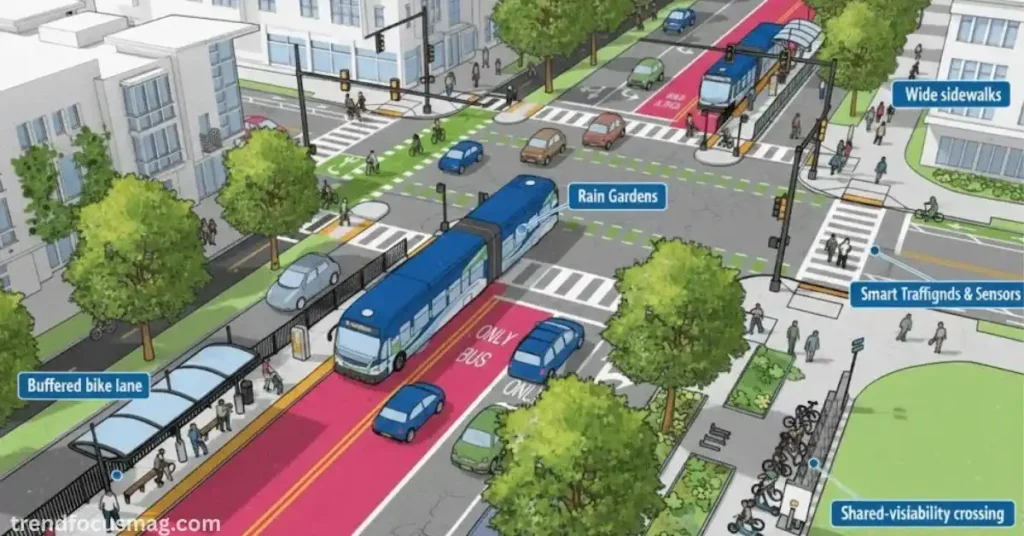
Pedestrian-Centric Urban Planning in 2026: Urban planning has entered a new era in 2026 — one that prioritizes people over cars. As cities grapple with congestion, climate change, and public health challenges, planners are turning toward walkable, human-scale design philosophies that improve livability, sustainability, and economic vitality.
The goal of pedestrian-centric planning is straightforward: create urban environments where walking is safe, comfortable, and convenient, reducing dependency on private vehicles while fostering healthier, more connected communities.
Cities Are for People, Not Cars: A Global Shift
The philosophy that cities should prioritize people rather than vehicles is gaining momentum worldwide.
Cities like Copenhagen and Amsterdam have long demonstrated that when walking and cycling are prioritized, communities become healthier and more vibrant. Wide sidewalks, safe intersections, mixed-use neighborhoods, and efficient public transport reduce the need for cars.
In Madrid, urban planners have used spatial analytics and OpenStreetMap data to analyze walkability patterns. Research shows that highways and large roundabouts fragment communities, while smaller street grids, green corridors, and pedestrian pathways significantly improve accessibility.
Car-oriented cities often weaken:
- Social interaction
- Environmental health
- Community cohesion
Pedestrian-friendly environments do the opposite.
Real-World Transformation: The Power of Reclaiming Streets
During the pandemic, a 26-block stretch in Jackson Heights, Queens was converted into a pedestrian-only corridor known as Paseo Park. What was once a busy traffic artery became:
- A safe space for children learning to ride bikes
- A venue for outdoor salsa classes
- A community gathering space
Similarly, Times Square in New York City was redesigned to prioritize pedestrians. The results were measurable:
- Reduced traffic injuries
- Increased foot traffic
- Higher retail revenue
These examples show that pedestrian-first planning strengthens both safety and economic vitality.
Core Principles of Pedestrian-Friendly Urban Design
Pedestrian-centric planning goes beyond adding sidewalks. It requires a comprehensive strategy.
1. Prioritize Walking and Cycling
Safe pedestrian streets reduce traffic, encourage physical activity, and lower pollution levels.
Effective strategies include:
- Narrowing vehicle lanes to slow speeds
- Raised crosswalks
- Protected bike lanes
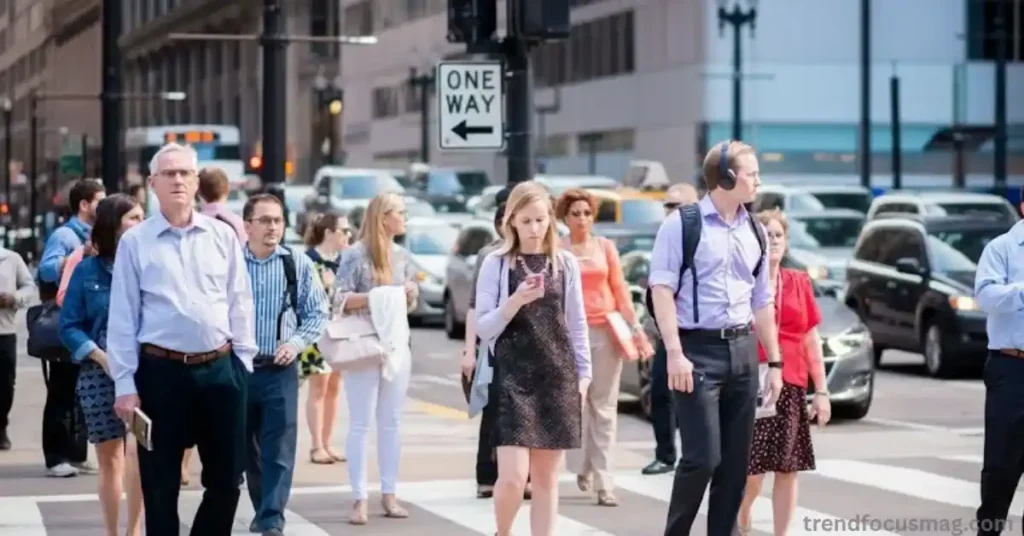
- Extended pedestrian crossing times
Urban thinker Jane Jacobs, in The Death and Life of Great American Cities, argued that lively streets create safer communities. Modern cities applying her principles often report increased social trust and reduced crime.
2. Integrate Green Spaces and Plazas
Public parks and plazas are not luxuries — they are urban necessities.
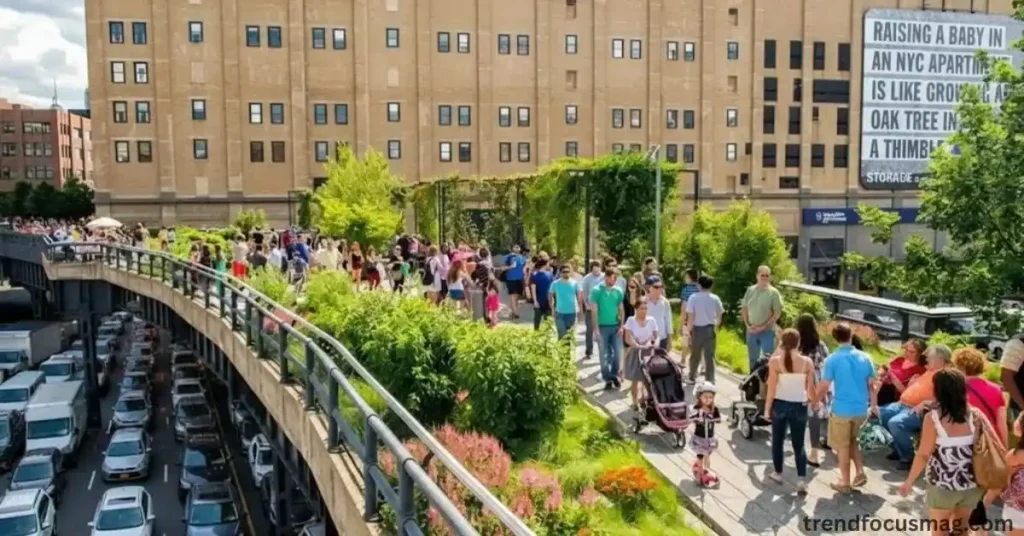
The High Line transformed an abandoned railway into an elevated green walkway, now attracting millions of visitors annually.
Green infrastructure:
- Improves air quality
- Reduces urban heat
- Encourages physical activity
- Strengthens community bonds
Even smaller plazas — such as those in Melbourne — act as hubs for markets, art events, and cultural gatherings.
3. Ensure Accessibility and Inclusivity
A pedestrian-friendly city must work for everyone.
Inclusive design includes:
- Wheelchair-accessible ramps
- Tactile paving for visually impaired individuals
- Clear signage and lighting
- Shaded seating for elderly residents
- Safe crossings near schools
When accessibility improves, cities become safer and more equitable.
4. Reclaim Streets as Social Spaces
During COVID-19, streets temporarily became outdoor classrooms, dining spaces, and event venues. This revealed a powerful truth:
Streets are not merely traffic corridors — they are public living rooms.
When communities reclaim space from cars, social interaction increases, mental health improves, and local economies benefit.
Step-by-Step Guide to Implementing Pedestrian-Centric Urban Planning in 2026
Cities looking to transition can follow these structured steps:
Step 1: Assess Walkability
Use spatial data tools and pedestrian audits to map sidewalks, crossings, and green networks.
Step 2: Identify Barriers
Locate highways, industrial zones, and oversized intersections that disrupt pedestrian flow.
Step 3: Redesign Streets
Introduce traffic-calming measures:
- Narrowed lanes
- Raised crossings
- Decorative lighting
- Street trees
Step 4: Activate Public Spaces
Convert underused lots into plazas, parks, or pedestrian corridors. Support events like markets and cultural activities.
Step 5: Design for Inclusivity
Ensure infrastructure accommodates all age groups and abilities.
Step 6: Engage the Community
Involve residents in planning and maintenance decisions to ensure long-term success.
Step 7: Monitor and Adapt
Measure pedestrian traffic, safety metrics, and public feedback to refine improvements.
The Benefits of Pedestrian-Centric Urban Planning
Health Benefits
- Encourages daily physical activity
- Reduces obesity and heart disease
- Improves mental well-being
Environmental Benefits
- Lowers carbon emissions
- Reduces noise pollution
- Improves air quality
Economic Benefits
- Increases retail sales
- Boosts tourism
- Enhances property values
Social Benefits
- Strengthens neighborhood ties
- Reduces isolation
- Builds community resilience
Research by Eric Klinenberg on the 1995 Chicago heatwave demonstrated that neighborhoods with strong social infrastructure had significantly lower mortality rates. Similarly, studies by Raj Chetty show that children raised in walkable, connected neighborhoods often experience better long-term economic outcomes.
Overcoming Challenges
Traffic Redistribution
Limiting car access can shift congestion elsewhere. Solutions include:
- Congestion pricing
- Expanded public transit
- Car-sharing programs
Funding Constraints
While pedestrian infrastructure requires investment, long-term savings in healthcare, safety, and economic growth often outweigh initial costs.
Maintenance and Safety
Partnerships between city agencies, local businesses, and community groups ensure public spaces remain clean and secure.
The Rise of the 15-Minute City
The “15-minute city” concept promotes neighborhoods where essential services — schools, healthcare, groceries, recreation — are accessible within a short walk or bike ride.
This model aligns perfectly with pedestrian-centric design by:
- Reducing car dependency
- Encouraging local economic activity
- Supporting sustainability goals
- Strengthening community life
In 2026, this model is increasingly shaping urban policy worldwide.
Conclusion
The shift toward pedestrian-centric urban planning is not a temporary trend — it is a structural transformation in how cities function.
From Paseo Park to Times Square, from Copenhagen to Amsterdam, the evidence is clear: when cities prioritize people over cars, they become safer, greener, healthier, and more prosperous.
The cities of the future will not be defined by traffic congestion and parking lots. They will be defined by walkable neighborhoods, vibrant public spaces, and communities built around human connection.
Cities are for people — and 2026 is proving it.
FAQs
What is pedestrian-centric urban planning?
It is an approach that prioritizes walking, cycling, public spaces, and human-scale infrastructure over car-dominated design.
How does it benefit communities?
It improves public health, strengthens local economies, reduces pollution, and increases social interaction.
What are key features?
Wide sidewalks, protected bike lanes, traffic calming, green spaces, accessible infrastructure, and mixed-use development.
Can it reduce traffic congestion?
Yes. By encouraging walking, cycling, and public transit, overall car dependency decreases.
Which cities are leading this shift?
Cities like Copenhagen, Amsterdam, Madrid, and New York City have implemented strong pedestrian-focused initiatives.
More from TrendFocusMag:
- Minecraft PlayBattleSquare 2026: Tips, Tricks & Competitive Guide
- About Filkizmiz253: A Digital Identity Explained
- 10 Unique Florida Souvenirs at 2026 Annual Floridiana Fest Sarasota

Our mission is to provide timely, trustworthy, and impactful stories that help our audience stay informed in a fast-moving world.