
Let’s be honest for a second. You’ve just finished an hour-long Zoom meeting with a potential client, and it was gold—insights, action items, that perfect quote you needed for your article. But now, an hour later, you’re struggling to remember exactly what was said. Sound familiar?
If you’re hunting for the best Zoom audio recorder in 2026, you’re not alone. Remote work isn’t going anywhere, and neither is the need to preserve those virtual conversations that drive our businesses, education, and creative projects. Whether you’re a podcaster interviewing guests across continents, a journalist conducting remote interviews, or a project manager who needs accurate meeting notes, capturing Zoom audio properly has become essential.
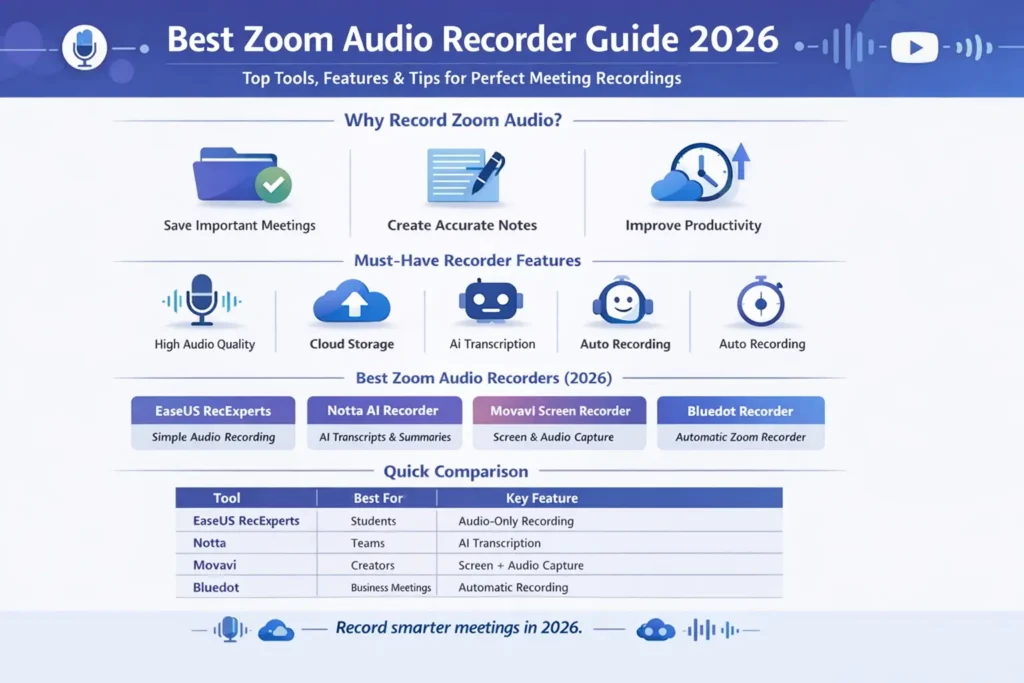
But here’s the thing: Zoom’s built-in recording feature? It’s fine for basic stuff, but it’s like using your phone’s speaker for a concert—it works, but you’re missing so much. In this comprehensive Best Zoom Audio Recorder Guide 2026, we’re diving deep into both hardware and software solutions that will transform your Zoom recordings from mediocre to professional-grade. We’ll explore why 32-bit float recording is changing the game, compare top tools like EaseUS RecExperts and Notta, and help you choose the perfect recorder for your specific needs. Let’s turn those vanishing conversations into lasting assets.
Understanding Zoom Audio Recording in 2026
Before we jump into specific products, let’s understand why Zoom audio recording has become such a hot topic this year. The way we work has fundamentally changed. Hybrid environments, global teams, and remote interviews aren’t temporary fixes—they’re permanent fixtures of professional life.
Why Recording Zoom Audio Matters More Than Ever
Think about your typical week. How many Zoom calls do you join? For most professionals in 2026, the number ranges from five to fifteen, sometimes more. Each conversation contains valuable information: decisions made, tasks assigned, creative ideas sparked, and relationships built.
Here’s the problem: human memory is unreliable. Studies suggest we forget about 50% of new information within an hour of hearing it. By the next day, that number jumps to 70%. Without a recording, your important meeting essentially vanishes into thin air.
Remote communication has become permanent. Whether you’re attending online classes, hosting client meetings, conducting interviews, or running webinars, those conversations contain insights you can’t afford to lose. Recording audio from meetings lets you revisit discussions, confirm decisions, and create accurate documentation months later.
The demand for reliable Zoom audio recording tools has skyrocketed as hybrid work environments become standard across industries. Businesses rely on recordings to archive discussions and maintain compliance. Students depend on them to review lectures before exams. Podcasters and journalists use recorded Zoom conversations to create interviews or transcribe quotes for articles.
Built-in Zoom Recording vs Third-Party Recorders: The Honest Truth
When people first search for ways to record Zoom audio, they usually assume the platform’s built-in recorder will handle everything. And honestly, it’s not bad—for basic needs. But it has some significant restrictions that might surprise you.
Zoom’s built-in recording requires host permission. If you join a webinar or company meeting as an attendee, you might not have access to recording options unless the host explicitly enables it. All participants receive a notification when recording begins, which is good for transparency but not ideal for every situation.
Here’s another limitation: audio-only recording isn’t straightforward. Zoom generally records video and audio together, and only paid cloud recording plans can generate separate audio files. (EaseUS)
Third-party recording tools address these limitations beautifully. They give you greater control over how meetings are captured. Many allow you to record internal system audio, microphone input, or both simultaneously. Some even offer scheduled recordings that start automatically when a meeting begins—no more forgetting to hit record.
Advanced recorders now include AI-powered capabilities. Tools like Notta can record meetings while generating transcripts and summaries automatically, letting you search conversations like text documents. (Notta)
Think of Zoom’s built-in recorder as a basic voice memo. It works when you need something simple. But third-party recorders function more like a complete digital meeting assistant, capable of recording, organizing, transcribing, and sharing conversations instantly.
Key Features to Look for in a Zoom Audio Recorder
Choosing the best Zoom audio recorder means understanding what features actually matter. Let’s break down the essentials you should consider before making a decision.
Audio Quality and Noise Reduction
Let’s be real for a moment. Audio quality is the single most important factor. If your recording sounds distorted, muffled, or filled with background noise, the entire purpose becomes pointless. You need every participant’s voice clear and understandable during playback.
Modern recording software uses advanced audio processing techniques to capture clean sound even in less-than-ideal environments. Noise reduction filters can remove common disturbances like keyboard typing, air conditioning hums, or laptop fan noise. These improvements make recordings sound more professional and easier to transcribe.
Some recording tools let you choose between recording system audio, microphone input, or both simultaneously. This flexibility is gold for meetings where you want to capture your voice separately from the conversation. Content creators often record commentary alongside meeting audio for tutorials or reviews.
Another feature worth considering is multi-track recording. Instead of combining all voices into a single audio file, some recorders save each participant on separate tracks. This makes editing and enhancement significantly easier, especially for podcasters or interviewers.
In simple terms, recording quality can make or break your meeting archive. A clear recording transforms a casual conversation into a reliable information resource you can reference for months or even years.
Cloud Storage and Automatic Backups
Recording Zoom meetings regularly can devour storage space fast. A single hour-long meeting might produce hundreds of megabytes of data, especially with high-quality formats. This is where cloud storage integration becomes incredibly valuable.
Many modern Zoom audio recorders automatically upload recordings to the cloud immediately after meetings end. This means you don’t have to worry about transferring files manually or losing recordings due to hardware failures. Cloud storage also lets you access recordings from anywhere, making collaboration much easier.
For teams and businesses, cloud storage adds another advantage: shared access. Instead of sending massive audio files through email, you can simply share a link. Team members who missed the meeting can review it later without bothering the original host.
Security is also critical. Many professional recording platforms encrypt audio files and restrict access through secure authentication systems. This protects sensitive meeting information, particularly in industries like finance, healthcare, and consulting.
Automatic backups further enhance reliability. Imagine recording an important client meeting only to discover the file was accidentally deleted. With cloud-based recorders, backup copies are stored safely online, ensuring critical conversations are never lost.
The Zoom H4essential –
— 𝙎𝙖𝙢𝙨𝙤𝙣 🔌 (@samsino_) March 3, 2026
4 track recorder with mixer function.
🎙 What you get out of it:
Record clear vocals, interviews, podcasts, music, and field audio without stress.
Capture up to 4 tracks at once (built-in mics + external mics).
Spend less time editing, more time… pic.twitter.com/NCzubppi0L
AI Transcription and Meeting Summaries
One of the biggest advancements in Zoom recording technology is AI-powered transcription. Instead of listening to entire meetings to find specific comments, AI systems convert audio into searchable text automatically. This feature saves enormous time, especially for professionals attending multiple meetings daily.
AI transcription tools can identify speakers, highlight key topics, and generate discussion summaries. Some systems even extract action items and deadlines from conversations. The recording becomes more than just an audio file—it turns into a structured document that helps teams stay organized.
For example, AI meeting recorders like Notta automatically capture Zoom conversations while generating transcripts and summaries in real time. (Notta) This lets users review important moments quickly instead of replaying entire recordings.
Another emerging trend is AI-assisted meeting insights. These tools analyze conversations to identify decisions, questions, and follow-up tasks. In busy work environments, this functionality acts like a digital assistant ensuring nothing slips through cracks.
As AI technology continues evolving, Zoom recording tools become more intelligent and efficient. What once required hours of manual note-taking can now be completed automatically within seconds.
The Best Zoom Audio Recorders in 2026: Hardware Solutions
Now let’s dive into the actual products. We’ll start with hardware recorders—physical devices that connect to your computer or capture audio independently.
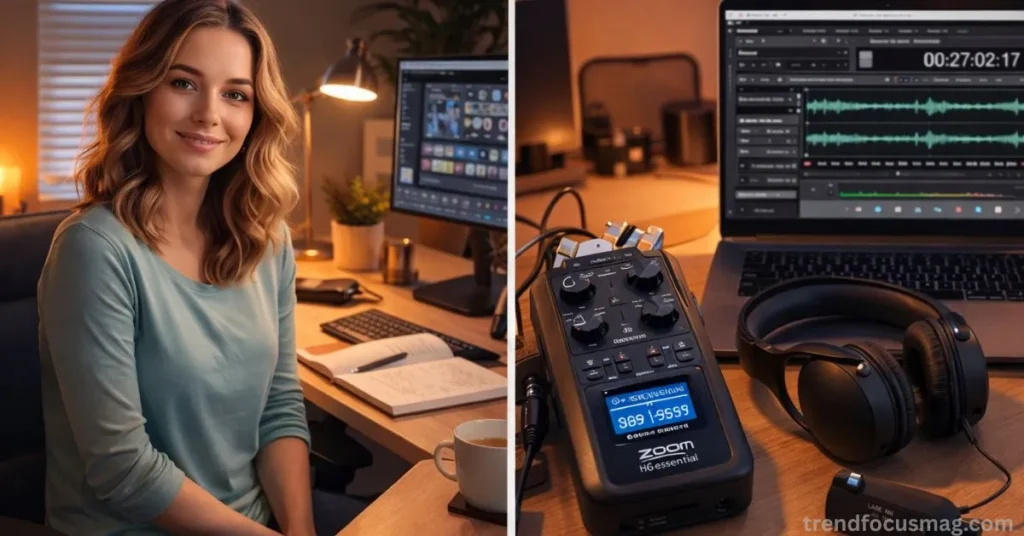
Zoom H6essential: The All-Round Powerhouse
If you need one device to rule them all, the Zoom H6essential is your heavyweight champion. It’s the updated version of the legendary H6, now supercharged with 32-bit float technology across all six recording tracks.
This isn’t just a recorder; it’s a production hub. It features four combo XLR/TRS inputs with incredibly clean Zoom preamps, plus the interchangeable microphone capsule system. You get the included XY stereo mic capsule, but you can swap it for a shotgun capsule for film or a mid-side capsule for immersive sound.
The large color screen now has a waveform display, making it easy to visualize your audio. For Zoom meetings, you can use it as a high-end USB interface, giving you broadcast-quality audio that makes you sound like you’re in a professional studio rather than your home office.
Who is it for? Serious podcasters, musicians, and professionals who need maximum flexibility and top-tier sound for their Zoom calls and recordings.
Zoom PodTrak P4: The Podcast Studio in a Box
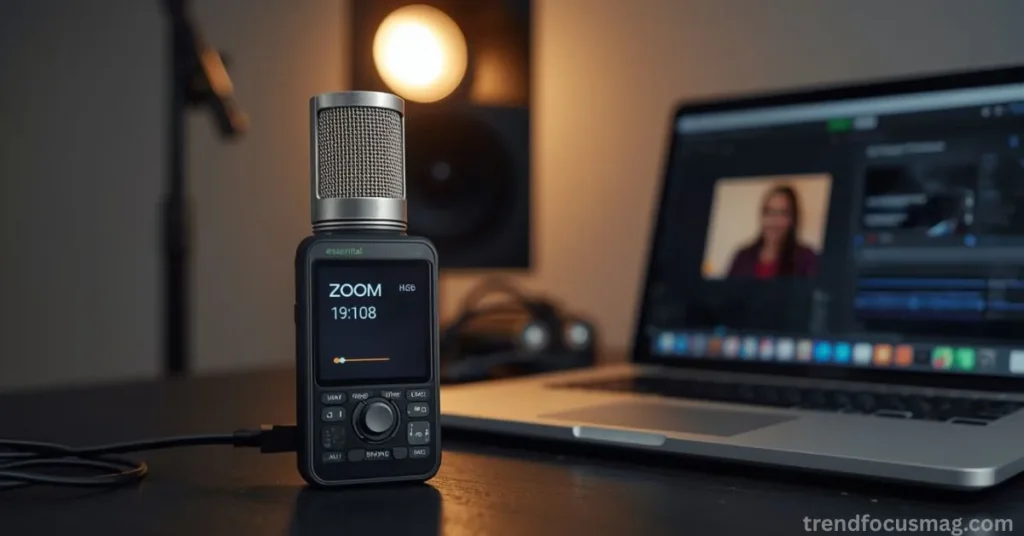
Podcasting has exploded, and the Zoom PodTrak P4 was designed specifically for it. While it doesn’t feature 32-bit float (it records in pristine 24-bit), it makes up for it with features that podcasters actually use. It’s often called a “pocket studio,” and for under $200, it’s hard to beat.
The magic of the P4 is its simplicity. It has four XLR inputs with plenty of gain for even dynamic microphones like the Shure SM7B. Crucially, it has four independent headphone outputs, so everyone in the room can hear themselves without latency.
It features sound pads for playing jingles, dedicated channels for remote callers via your smartphone (with mix-minus built-in), and the ability to record directly to an SD card. For Zoom podcasting, this is a game-changer—you get local backup recordings independent of internet quality.
Who is it for? Podcasters of all levels. Whether you’re solo or have a roundtable of four friends, the P4 is the easiest way to get broadcast-quality sound without a computer.
Zoom F2: The Invisible Audio Hero
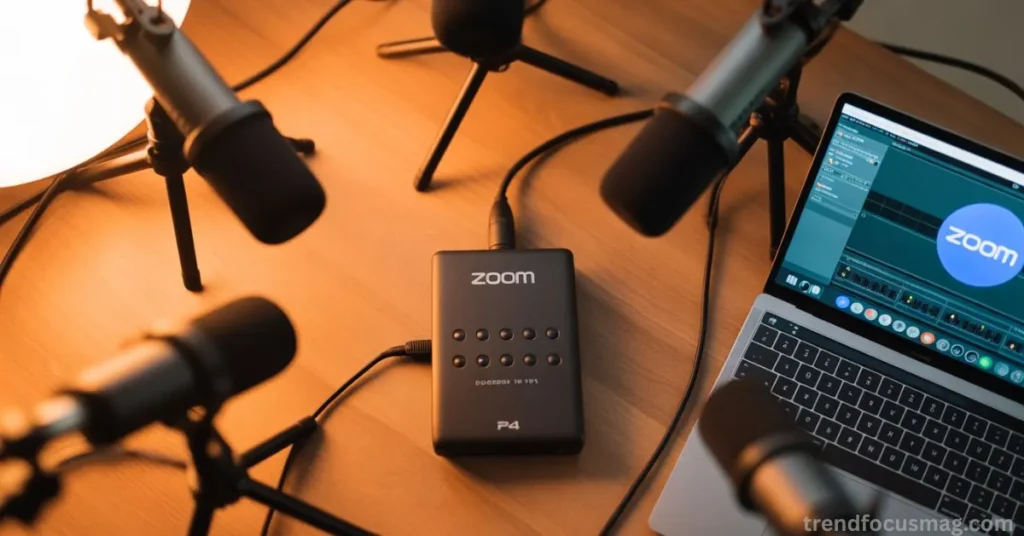
For videographers and content creators, audio quality is often compromised by bulky equipment. The Zoom F2 solves this elegantly. It’s an ultra-compact field recorder designed specifically for use with a lavalier microphone.
The F2 is a two-part system: a tiny, lightweight recorder that clips onto your belt or hides in a talent’s pocket, and a high-quality lavalier mic that plugs into it. And yes, it features 32-bit float recording, meaning you never have to worry about your interviewee getting too loud or too quiet.
For Zoom calls, you can use the F2 as a backup recorder or as a high-quality input source. Just clip on the lav, connect to your computer, and enjoy professional-grade audio that makes built-in laptop mics sound like tin cans.
Who is it for? Run-and-gun interviewers, documentary filmmakers, and anyone who needs pristine, hands-free audio for their Zoom conversations.
Zoom H1essential: The Pocket-Sized Powerhouse
Don’t let the size fool you. The Zoom H1essential might be the most liberating recorder Zoom has ever made. It packs that incredible 32-bit float technology into a device smaller than a smartphone.
The built-in X/Y microphones are perfectly positioned to capture natural, detailed stereo sound with a wide soundstage. You can literally throw it in your pocket, head to a coffee shop for a Zoom call, and hit record without worrying about levels.
It also features an accessible menu with audible navigation, making it great for visually impaired creators. For quick and dirty Zoom recordings where you need backup audio or just want simplicity, this little device delivers.
Who is it for? Students, journalists, and anyone who wants “set it and forget it” confidence in their Zoom audio.
The Best Zoom Audio Recorders in 2026: Software Solutions
Now let’s explore software options—applications that run on your computer and capture Zoom audio directly.
EaseUS RecExperts: The Balanced Performer
EaseUS RecExperts has become one of the most popular Zoom recording tools because it offers a perfect balance between simplicity and advanced functionality. The software lets you record internal audio, microphone input, or both simultaneously with minimal configuration.
One of the most useful features is its audio-only recording capability. Since Zoom’s built-in tool typically records both video and audio together, RecExperts provides a cleaner alternative for users who only want the sound from meetings. (EaseUS) This is especially valuable for podcasts, interviews, and lectures where video is unnecessary.
The software includes scheduling options that automatically start recording at specific times. This ensures you never miss important conversations even if you join late. Built-in editing tools let you trim or split recordings directly within the application.
RecExperts also supports noise reduction and background filtering to enhance audio clarity. For professionals conducting interviews or recording training sessions, these features dramatically improve recording quality.
Who is it for? Students, interviewers, and professionals who need reliable, high-quality Zoom audio recording without complicated setup.
Notta AI Recorder: The Smart Assistant
Notta has quickly gained attention as one of the most powerful AI-based meeting recorders available today. Instead of simply recording audio, the platform focuses on transforming meetings into organized, searchable knowledge.
The tool records Zoom meetings while automatically generating transcripts, summaries, and action items. (Notta) This functionality is particularly useful for teams that rely heavily on collaboration and documentation.
Another major advantage is its cloud-based architecture. Recordings are saved securely online, letting you review conversations from any device. Teams can share recordings instantly through secure links, making collaboration much easier.
Notta integrates with several productivity platforms such as Slack, Salesforce, and Notion. These integrations help automate workflows by connecting meeting insights directly to project management tools.
Who is it for? Remote teams, journalists, researchers, and anyone who needs reliable transcripts of interviews or discussions.
Movavi Screen Recorder: The Content Creator’s Choice
Movavi Screen Recorder is another widely used solution for capturing Zoom meetings. While primarily designed as a screen recording tool, it offers powerful audio recording capabilities that work seamlessly with video conferencing platforms.
One strength is its intuitive interface. Even users with minimal technical experience can start recording meetings within minutes. The software captures system audio and microphone input separately, giving you full control.
Movavi includes editing features that let you trim recordings and remove unnecessary segments. This functionality is useful when preparing recorded meetings for presentations or training materials.
Another advantage is the ability to record high-definition video and audio simultaneously. (Movavi) While the main focus may be screen recording, the tool performs exceptionally well for audio capture too.
Who is it for? Content creators, educators, and users needing an all-in-one solution for both screen and audio recording.
Bluedot Zoom Recorder: The Set-and-Forget Solution
Bluedot is a modern Zoom recording solution designed specifically for capturing meetings without complicated configuration. The tool works as a browser extension and automatically records meetings with both audio and video.
One standout feature is automated recording. You can configure the extension so recording starts as soon as a Zoom meeting begins. This ensures no part of the conversation is missed, even if the meeting starts early.
Bluedot also captures additional meeting data such as chat messages and shared screens. (Bluedot) This provides a complete record including discussions occurring in the chat panel.
Another advantage is cloud storage integration. Recorded meetings automatically upload and store online, making them easy to access later. Share recordings with colleagues through simple links rather than transferring large files.
Who is it for? Professionals attending frequent meetings who want a convenient, automated solution.
Comparison of Top Zoom Audio Recorders
HARDWARE RECORDERS (Physical Devices)
| Rank | Recorder Name | Type | Key Features | Best For |
|---|---|---|---|---|
| 1 | Zoom H6essential | Hardware | 32-bit float, 4 XLR inputs, interchangeable mic capsules, waveform display, USB audio interface | Professional audio, musicians, serious podcasters |
| 2 | Zoom PodTrak P4 | Hardware | 4 headphone outs, sound pads, phone-in capability, 4 XLR inputs, records to SD card | Podcasters, remote interviewers |
| 3 | Zoom F2 | Hardware | 32-bit float, lavalier compatible, ultra-compact, belt clip, long battery life | Videographers, interviewers, documentary filmmakers |
| 4 | Zoom H1essential | Hardware | 32-bit float, built-in XY mics, pocket-sized, accessible menu, set-and-forget operation | Students, journalists, solo creators |
| 5 | Zoom PodTrak P8 | Hardware | 6 XLR inputs, touchscreen interface, remote call management, 8 sound pads, Bluetooth | Professional podcast studios |
| 6 | Zoom H5studio | Hardware | Studio-grade preamps (-127 dBu EIN), interchangeable mics, 32-bit float, 2 XLR inputs | Musicians, home studio owners, singer-songwriters |
SOFTWARE RECORDERS (Applications)
| Rank | Recorder Name | Type | Key Features | Best For |
|---|---|---|---|---|
| 7 | Notta AI Recorder | Software | AI transcription, automatic summaries, cloud storage, speaker identification, action item extraction | Teams, journalists, researchers |
| 8 | EaseUS RecExperts | Software | Audio-only recording, scheduling, noise reduction, built-in editing, multiple format support | Students, general users, interviewers |
| 9 | Movavi Screen Recorder | Software | Screen + audio recording, intuitive interface, editing tools, HD video capture | Content creators, educators, YouTubers |
| 10 | Bluedot Recorder | Software | Automatic recording, chat capture, cloud storage, browser extension, screen capture | Business meet |
How to Record Zoom Audio Step-by-Step
Method 1: Using Zoom Built-in Recorder
Recording Zoom meetings using the platform’s built-in recorder is straightforward if you’re the host or have recording permission. Once the meeting starts, simply click the “Record” button in the meeting toolbar. Zoom immediately notifies participants.
After the meeting ends, Zoom automatically processes the recording and saves it either locally or in the cloud depending on your account settings. Paid accounts may receive separate audio files, making audio extraction easier.
While simple, this method has limitations. Host permission is required, and audio-only recording isn’t always available without a cloud subscription. For basic needs, though, it remains convenient.
Method 2: Using Third-Party Software
Third-party recorders provide more flexibility. After installing the software, simply select the audio source—system sound, microphone, or both. Once the Zoom meeting begins, the recording software captures audio in the background.
Some tools include scheduled recording features that automatically start when meetings begin. This eliminates the need to manually activate the recorder.
The biggest advantage is control. You can record meetings without relying on host permissions and customize audio quality settings to match your needs.
Tips for High-Quality Zoom Audio Recording
Optimize Microphone and Audio Settings
Even the best recording software can’t compensate for poor audio hardware. Using a quality external microphone significantly improves recording clarity. USB microphones typically provide better sound quality than built-in laptop mics.
Adjust Zoom’s audio settings before recording. Enabling features like original sound and disabling aggressive noise suppression can improve recording quality, especially for music or podcast discussions.
Testing audio settings before the meeting begins is another important step. Record a short sample to ensure both system audio and microphone input are captured correctly.
Reduce Background Noise
Background noise can quickly ruin valuable recordings. Simple steps like closing windows, turning off fans, and using headphones can dramatically improve sound quality.
Noise reduction filters built into recording software can also help remove minor background sounds. However, minimizing noise at the source is always the best approach.
A quiet recording environment ensures conversations remain clear and easy to understand when replaying later.
Expert Analysis: Navigating the Zoom Recording Landscape in 2026
So how do you actually choose the best Zoom audio recorder for your workflow? The key is looking beyond specs and considering your creative process.
If you’re a solo creator working alone, the simplicity of the H1essential or the versatility of EaseUS RecExperts might be ideal. You benefit from 32-bit float recording or straightforward software because you don’t have time to fiddle with complex settings when you’re focused on the conversation.
If you’re a podcaster or interviewer collaborating with others, the PodTrak P4 or Notta becomes a better fit. Their user-centric features—independent headphone mixes, sound pads, AI transcription—solve real-world production problems.
For professional videographers, the decision often comes down to size versus inputs. The F2 is unbeatable for discrete, set-and-forget recording with lavaliers. But if you’re capturing complex scenes with multiple audio sources, the H6essential with its XLR inputs becomes necessary.
Ultimately, Zoom and third-party developers have segmented their 2026 lineup so well that there’s a clear “best” option depending on where you fall in this creative spectrum.
Future Trends in Zoom Recording Technology
Zoom recording technology is evolving rapidly as artificial intelligence integrates more deeply into communication tools. In the near future, recording software will likely include advanced features like automatic meeting highlights, emotion detection, and real-time translation.
AI meeting assistants may automatically categorize conversations and generate summaries for each agenda topic. This would transform recordings into fully searchable meeting databases rather than simple audio files.
Hardware innovations are also emerging. Some modern recording devices now combine AI transcription with physical recording hardware designed specifically for meetings and interviews. These devices automatically sync recordings with desktop applications and cloud storage.
The future of Zoom audio recording is moving toward fully automated meeting intelligence, where recordings become interactive knowledge resources rather than passive audio archives.
Conclusion
Zoom meetings have become essential to modern communication, but the value of those meetings often disappears once the call ends. Recording audio ensures that ideas, decisions, and discussions remain accessible long after.
Choosing the best Zoom audio recorder depends on your specific needs. Basic users may find Zoom’s built-in recording features sufficient. Professionals and teams often benefit from advanced tools providing AI transcription, automated summaries, and cloud storage.
Tools like Zoom H6essential, PodTrak P4, EaseUS RecExperts, and Notta represent some of the best solutions available in 2026. Each offers unique advantages, from simple audio capture to powerful AI-driven meeting analysis.
Ultimately, the best recorder is the one that fits seamlessly into your workflow. When used effectively, Zoom recordings transform everyday conversations into valuable resources that improve productivity, collaboration, and decision-making.
Frequently Asked Questions
1. Can you record Zoom audio without being the host?
Yes. Third-party recording tools allow users to capture Zoom audio even without host permissions. These tools record system audio directly from your computer instead of relying on Zoom’s built-in recorder.
2. Does Zoom notify participants when recording starts?
Yes. When using Zoom’s built-in recording feature, all participants receive a notification that the meeting is being recorded.
3. Can Zoom record audio only?
Zoom can generate separate audio files through cloud recording on paid accounts, but it generally records both video and audio during meetings.
4. What is the best free Zoom audio recorder?
Several tools offer free versions, including EaseUS RecExperts and various screen recording software options that capture system audio.
5. How do I improve Zoom recording quality?
Use a high-quality external microphone, reduce background noise, adjust Zoom audio settings, and use recording software with noise reduction features.
More from TrendFocusMag:
The Impact of Technology on Reading Habits and the Publishing Industry
About Filkizmiz253: A Digital Identity Explained
Minecraft PlayBattleSquare 2026: Tips, Tricks & Competitive Guide

Our mission is to provide timely, trustworthy, and impactful stories that help our audience stay informed in a fast-moving world.