
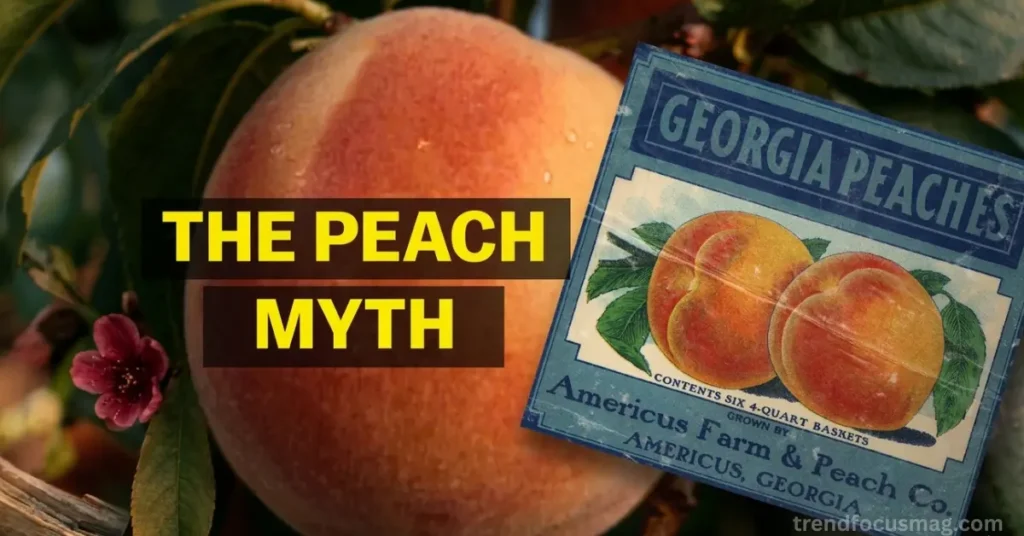
The Biggest Peach Myth in America: When you bite into a perfectly ripe peach, it’s a sensory experience. The fuzz, the juice, the sweetness—it’s pure summer. In the United States, we associate this fruit with one place above all others: Georgia. From license plates to movie endings, the Georgia peach is an American icon.
But here is a fun fact that might surprise you: Georgia isn’t even the top peach producer in the US. So, if they don’t grow the most, why are they the “Peach State”? It turns out the story is less about farming and more about clever marketing, a broken economy, and a fruit that traveled the world to find a home. Let’s dig into the history of the peach and uncover the truth behind the myth.
What Exactly is a Peach?
Before we dive into the history, let’s look at the fruit itself. A peach is a stone fruit, meaning it has a hard pit in the center. You might have noticed there are different types:
- Clingstone: The flesh sticks tightly to the pit.
- Freestone: The flesh pulls away cleanly, making them easier to eat and bake with.
They come in yellow or white varieties, and if you see one without the fuzz, that’s a nectarine—technically the same fruit, just with a smooth skin.
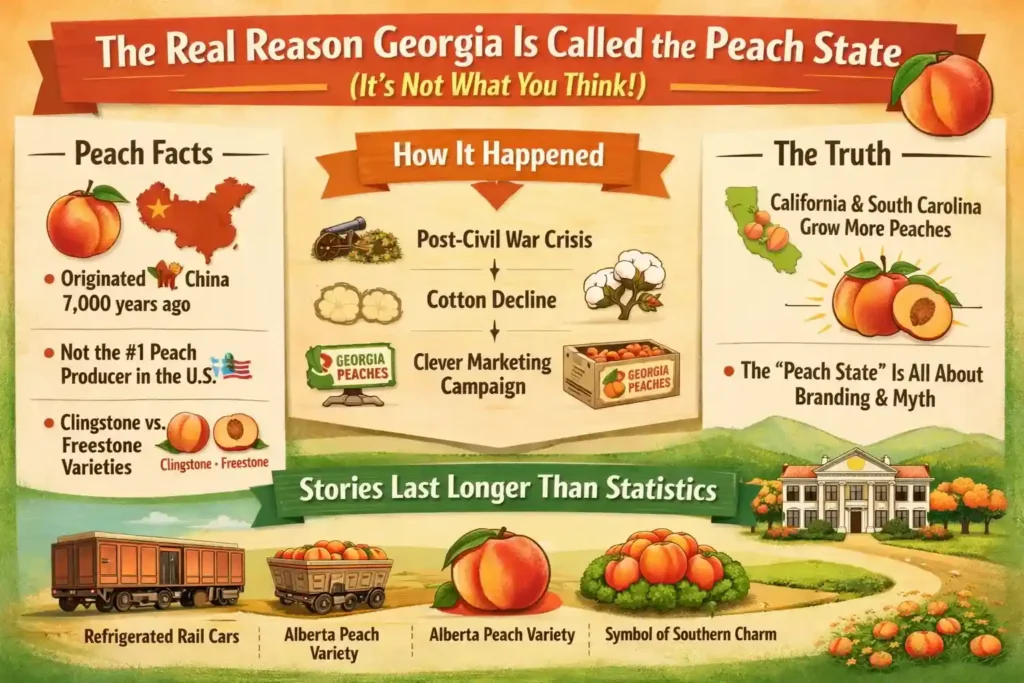
While we think of the peach as a classic American treat, it actually traveled a long way to get here. The earliest evidence of peach usage dates back about 7,000 years to China. From there, they traveled the Silk Road to Europe. Spanish explorers eventually brought peach pits to Florida in the 1500s, where Native Americans helped spread them up the coast.
The Fall of Cotton and the Rise of the Peach
For a long time, the South ran on cotton. But after the Civil War, Georgia’s economy was in shambles. The old ways of doing things were gone, and the state needed a new reputation.
This is where the peach comes in. A group of upper-class folks and newspaper men started pushing a new idea. They wanted to move away from the image of “King Cotton.” They started using phrases like “Queen Peach is dethroning King Cotton” to show that Georgia was building a new kind of agricultural civilization.
The goal wasn’t just to grow peaches; it was to build a brand. But they had a major problem: peaches bruise easily and spoil fast. To ship them north to big markets like New York and Chicago, they needed a tougher fruit.
The Alberta Peach: A Southern Gentleman’s Gift
Enter Samuel Rumph, a horticulturalist in Marshallville, Georgia. He developed the most important commercial peach variety in the state: the Alberta.
Rumph likely crossed a Chinese cling peach with a yellow freestone variety. He named the new fruit after his wife, Alberta—a clever move for a southern gentleman looking to build a legacy.
The peach trees are starting to flower🌸
— T🌲 (@NatureEnjoyer_) April 26, 2025
This is probably the best i’ve ever seen them look, usually they’re closed up more!
Hopefully we have another good crop like last year 🍑🍑🍑 pic.twitter.com/EU6sNpGd37
At the same time, technology was catching up. The development of refrigerated train cars allowed Georgia to become the first peach-growing region to ship fruit long distances. By the early 1900s, crates labeled “Georgia Peaches” were a common sight in northern cities. At one point, more Alberta peaches were grown than any other fruit variety in the country.
The Truth About The Biggest Peach Myth in America: Georgia’s Peach Harvest
Despite the catchy nickname and the carnival parades in the 1890s and 1920s, peaches never actually surpassed cotton economically. The peach industry fit hand-in-glove with the cotton economy, especially regarding labor.
Today, the reality is that Georgia isn’t the top producer. South Carolina and California have both overtaken Georgia in terms of volume, with California producing the most peaches in the US. And globally, China dwarfs them all, producing more peaches than any other country.
In fact, by 2017, Georgia had only about 12,000 acres of peaches left, compared to nearly 150,000 acres in the 1920s.
Modern Challenges in Peach Farming
The peach industry today faces several modern hurdles that affect the harvest:
- Labor Shifts: The mostly Black labor force that powered the early orchards declined during the Great Migration. Today, modern orchards rely heavily on immigrant labor, often through H-2A guest worker programs.
- Weather Vulnerability: Peaches require a certain number of “chill hours” (time below 45°F) to bloom properly. If a late freeze hits after blooming, it can be devastating. In 2023, some Georgia growers lost over 90% of their crop due to bad weather.
| Aspect | Historical Context | Modern Reality |
|---|---|---|
| Top Producer | Georgia (Early 1900s) | California (USA); China (Global) |
| Key Variety | Alberta Peach | Varied (Clingstone/Freestone) |
| Labor Force | Primarily Black labor post-Civil War | Immigrant labor (H-2A programs) |
| Main Challenge | Spoilage during transport | Climate change (late freezes) |
Why the “Peach State” Nickname Stuck
So, if the numbers don’t support the nickname, why does Georgia still hold the title?
It comes down to a simple truth: stories last longer than crops.
When the South was looking for a new reputation after the Civil War, the peach was there. It became a symbol of rebirth, hospitality, and quality. Even though other states now grow more fruit, the “Georgia Peach” had already become a myth. In 1995, the peach was officially named the state fruit, cementing the legend in history.
Whether it’s in a pie, a cobbler, or a brandy, the peach remains a powerful symbol of Southern identity—even if the one you’re eating came from South Carolina.
Key Takeaways
- Origin: The peach originated in China, not Persia or Georgia.
- The Myth: Georgia became the “Peach State” due to post-Civil War marketing, not because it grows the most peaches.
- The Alberta: This variety, developed by Samuel Rumph, was key to making peaches shippable.
- Current Stats: California and South Carolina now produce more peaches than Georgia.
- Modern Risks: Peach farmers today struggle with labor shortages and climate risks like late freezes.
Conclusion
The Biggest Peach Myth in America: The story of the Georgia peach is a perfect example of how branding can outlast reality. It’s a story of war, innovation, and a juicy fruit that helped a state reinvent itself. Next time you enjoy a peach, think about the history behind it—from ancient China to the refrigerated train cars of the American South.
Call to Action: Are you a fan of peaches? Do you prefer a yellow freestone or a white cling? Let us know in the comments below! And if you enjoyed this deep dive into food history, share this post with a friend who loves trivia.
Frequently Asked Questions (FAQs)
1. Why is Georgia called the Peach State if it doesn’t grow the most?
Georgia earned the nickname through aggressive marketing in the late 19th century to rebuild its economy after the Civil War, creating a lasting brand even though other states now produce more.
2. What is the difference between a clingstone and a freestone peach?
Clingstone peaches have flesh that sticks firmly to the pit, making them great for canning. Freestone peaches have flesh that pulls away easily, making them ideal for eating fresh and baking.
3. Where did peaches originally come from?
Despite their scientific name Prunus persica (suggesting Persia), peaches actually originated in China over 7,000 years ago.
4. What is the Alberta peach?
The Alberta is a famous peach variety developed in Georgia by Samuel Rumph. It was named after his wife and became the dominant commercial variety in the early 1900s due to its ability to survive shipping.
5. How does weather affect peach crops?
Peach trees need a certain number of “chill hours” (temperatures below 45°F) in winter to bloom properly in spring. If a late freeze occurs after blooming, it can destroy the majority of the crop.
More from TrendFocusMag:
Meteor Boom in Northeast Ohio: NWS Confirms Sonic Boom Source
Joan Lunden at 75: Memoir Reveals Shocking TV Boss Incident
Jim Carrey César Award Speech 2026: Emotional French Tribute Moves the World

Our mission is to provide timely, trustworthy, and impactful stories that help our audience stay informed in a fast-moving world.