
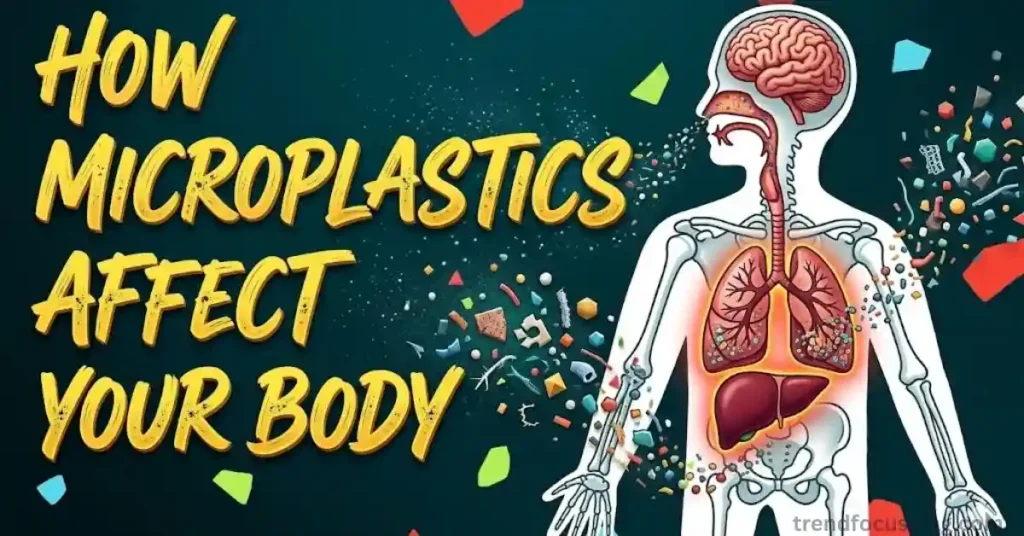
Let’s face it: plastic is everywhere. It wraps our food, makes up our clothes, and even sits in the air we breathe. It is so common that we often don’t think twice about it. But here is a hard truth—plastic is now inside our bodies.
From the water bottle you drink to the cutting board you use for dinner, microscopic particles are finding their way into your system. Scientists call these particles microplastics and nanoplastics. While it sounds scary, understanding the 3 surprising ways microplastics can enter your body is the first step to stopping them.
In this post, we’ll break down exactly how microplastics affect your health. We’ll look at the chemicals that come with them, and most importantly, we’ll give you practical, easy tips to reduce your exposure. Small changes in your kitchen and home can make a huge difference.
The 3 Surprising Ways Microplastics Can Enter Your Body
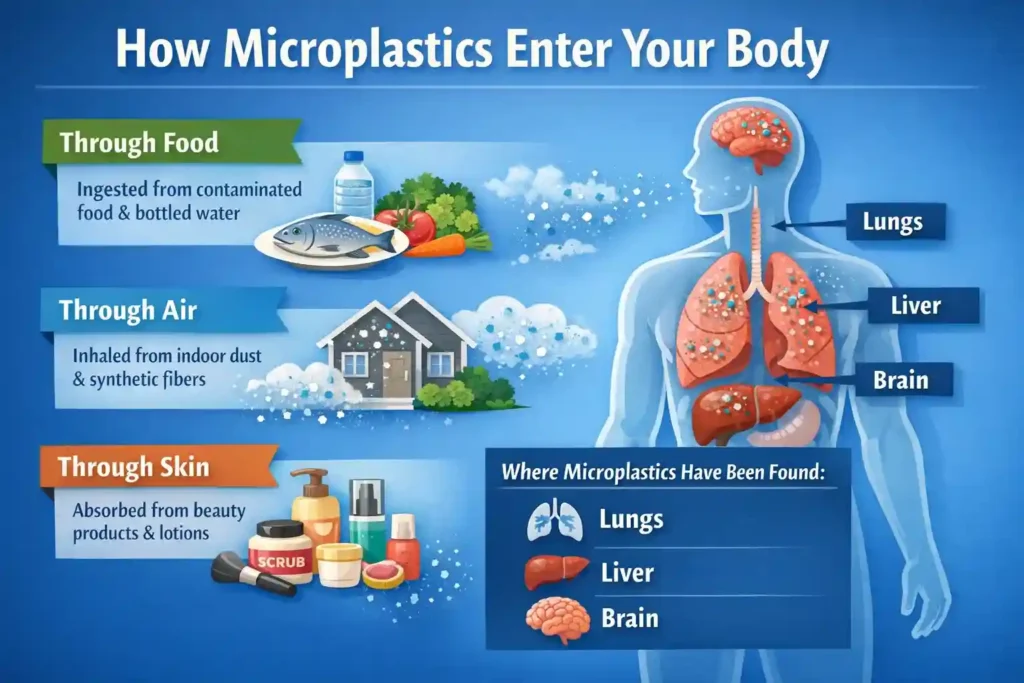
You might think you are safe because you don’t eat plastic bags. Unfortunately, microplastics are sneaky. Experts have identified the 3 surprising ways microplastics can enter your body: through the food we eat, the air we breathe, and the products we put on our skin.
It is nearly impossible to avoid them entirely, but knowing these pathways helps you fight back.
Through the Food You Eat (Even “Healthy” Food)
This is the biggest entry point. Even fresh produce and seafood now contain microplastic particles. Farms use plastic mulch, and oceans are filled with waste that breaks down into tiny pieces. So when you sit down for a salad or a piece of fish, you might be consuming more than just nutrients.
But the danger is often closer to home. That plastic container you microwaved last night? It likely released millions of particles into your leftovers. Even metal cans and paper wrappers often have a hidden plastic lining.
This is one of the 3 surprising ways microplastics can enter your body because most people assume fresh food is completely safe. The truth is, plastic packaging sheds particles into whatever it touches. A single liter of bottled water can contain over 200,000 microplastic particles.
Through the Air You Breathe Indoors
You probably don’t think about “breathing plastic” when you walk into your living room. But this is another one of the 3 surprising ways microplastics can enter your body.
We inhale tens of thousands of microplastic particles every day. If you live in a city or spend a lot of time indoors, you are breathing in more than someone in a rural area. Dust from synthetic carpets, furniture, and even clothing floats in the air and lands in our lungs.
Indoor spaces actually contain more airborne particles than outdoor rural areas. Your cozy synthetic blanket or that stylish polyester rug? They are constantly shedding tiny fibers that you breathe in without realizing it.
Through Your Skin via Beauty Products
Finally, your skin absorbs plastic. Many beauty and personal care products use plastics and toxic chemicals to create texture or scent. When you apply lotion, makeup, or even toothpaste, those particles can seep through your pores and into your bloodstream.
This is arguably the most overlooked of the 3 surprising ways microplastics can enter your body. We trust that products labeled “beauty” or “personal care” are safe, but many contain hidden plastics like polyethylene and phthalates.
What Happens Inside Your Body?
Once microplastics enter through one of the 3 surprising ways microplastics can enter your body, the body tries to fight back. The immune system sees these particles as invaders. It triggers inflammation to try to remove them.
However, our bodies cannot break down plastic. So, the inflammation becomes chronic. Over time, this causes long-term damage.
For example, when particles sit in your lungs, they cause constant irritation. This can worsen breathing issues like asthma or pneumonia. Even worse, inflammation brings blood flow to the area, which allows the tiny plastics to “hitch a ride” to other parts of your body.
Scientists have found these particles hiding in the liver, spleen, muscles, bones, and even the brain.
The Chemical Cocktail Inside Microplastics
The particles themselves are bad enough, but they are just the tip of the iceberg. There are over 16,000 chemicals used to make plastic. When microplastics enter your body through the 3 surprising ways microplastics can enter your body, so do these chemicals.
While researchers don’t know the effects of all these chemicals yet, they have identified a few dangerous groups: Endocrine Disrupting Chemicals (EDCs) . This group includes names like phthalates, PFAS, and BPA.
How These Chemicals Harm You
These chemicals mess with your hormones. They can:
- Hijack your metabolism: This increases the risk of obesity and type 2 diabetes.
- Mimic hormones: They confuse your body by acting like testosterone or estrogen.
- Affect reproduction: High phthalate levels in women are linked to pregnancy complications. High BPA in men is linked to lower sperm count.
In fact, research suggests these chemicals have played a major role in the global decline in sperm count over the last 50 years. Even more alarming, a study on pre-teens showed that exposure to these chemicals in the womb impacted when they started puberty over a decade later.
5 Practical Swaps to Stop Microplastics at the Source
Now that you know the 3 surprising ways microplastics can enter your body, it’s time to take action. It is easy to feel overwhelmed, but small choices add up.
Here is a table of simple swaps to help you reduce microplastic exposure starting today.
| Common Item | Plastic Risk | Safer Swap |
|---|---|---|
| Plastic Cutting Board | Knives cut grooves where plastic sheds into food. | Wood or Bamboo cutting board. |
| Plastic Storage Containers | Microwaving releases millions of particles. | Glass or Stainless Steel containers. |
| Non-Stick Teflon Pans | Coating degrades and releases particles. | Cast Iron or Ceramic cookware. |
| Synthetic Clothing | Sheds microfibers that you breathe in. | Natural Fibers like cotton, wool, or linen. |
| Bottled Water | Packaging sheds plastic into the water. | Stainless Steel or Glass reusable bottle. |
Beyond the Kitchen
- Shop Fresh: Whenever possible, buy fresh, unpackaged foods. The more plastic wrapping you skip, the better.
- Check Your Beauty Products: Look for labels that say “phthalate-free” and avoid synthetic fragrances.
- Ventilate: Use an air purifier or open windows to reduce indoor airborne microplastics.
The Bigger Picture: Why Legislation Matters
While individual choices matter, it is unfair to put all the pressure on the consumer. Plastic is a petrochemical product, just like gasoline. It is produced at a massive scale.
To truly solve the problem of microplastic pollution, we need big solutions. This means legislation. Governments at the local, state, and national levels need to regulate how much plastic is produced and ensure the materials we use are safer.
By reducing the amount of plastic we buy, we send a message to companies. But lasting change will come when laws are passed to protect our health and environment.
Conclusion
Plastic is deeply embedded in our modern lives, but it doesn’t have to be embedded in our bodies. You now know the 3 surprising ways microplastics can enter your body: through food, air, and skin. You also understand the risks of the toxic chemicals that come with them.
The goal isn’t to live in fear, but to live with awareness. Start small. Swap out that plastic cutting board. Ditch the bottled water. Choose natural fabrics. Each swap you make cuts off one of the 3 surprising ways microplastics can enter your body.
Take a look at your kitchen and bathroom today. What is one plastic item you can replace with glass, wood, or steel? Your body will thank you in the long run.
Frequently Asked Questions (FAQs)
1. Can the body get rid of microplastics once they are inside?
Yes, but slowly. The body excretes some particles through sweat, urine, and feces. However, current data suggests we accumulate microplastics faster than we can eliminate them.
2. Is bottled water safer than tap water regarding microplastics?
No. Surprisingly, bottled water often contains hundreds of thousands of microplastic particles per liter. Tap water generally has significantly fewer microplastics, especially if filtered.
3. What are the main health risks of microplastics in the body?
The risks include chronic inflammation, hormonal imbalances, and increased risk of metabolic diseases like diabetes and obesity. The chemicals in plastics, like phthalates and BPA, are known endocrine disruptors.
4. Does cooking with plastic cutting boards release microplastics into food?
Yes. Every time you chop food on a plastic board, you create microscopic grooves. These grooves release microplastic particles that stick to your food, especially if the food is wet or oily.
5. Are there medical treatments to remove microplastics from the body?
Currently, there are no medical interventions designed specifically to remove microplastics from human tissue. Prevention through lifestyle changes and avoiding the 3 surprising ways microplastics can enter your body is the best approach right now.
More from TrendFocusMag:
Are Whitening Strips Bad For Your Teeth?
Can Cats See in the Dark? A Cozy Look at Feline Night Vision
The Strongest Natural Antibiotic for Tooth Infection: Top 7 Remedies

Our mission is to provide timely, trustworthy, and impactful stories that help our audience stay informed in a fast-moving world.